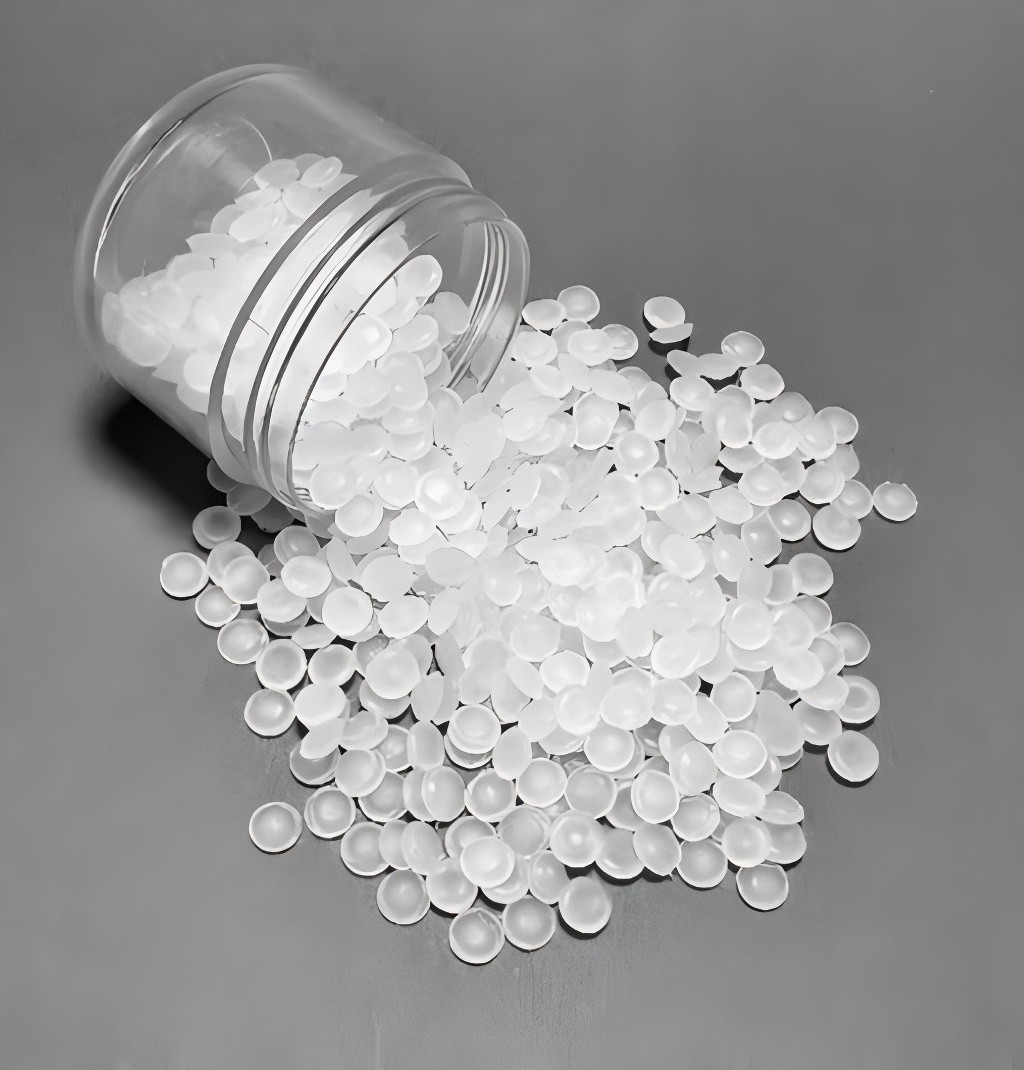

Poly(vinylidenefluoride)
- Category: Polymer Materials
PVDF, as a key material for corrosion-resistant equipment, is used to manufacture the overall or lining of pumps, valves, pipelines, pipeline fittings, storage tanks, and heat exchangers in fluid treatment systems. It is one of the best materials for handling high-purity and highly corrosive chemicals.
In the field of lithium-ion batteries, PVDF, as a positive electrode binder and separator coating, is an indispensable key material in battery manufacturing, providing excellent electrochemical stability and adhesion. When used as a positive electrode binder for lithium batteries, PVDF is usually mixed with active lithium storage materials such as graphite, silicon, tin, LiCoO2, LiMn2O4, or LiFePO4, as well as conductive additives such as carbon black or carbon nanofibers, in a certain proportion and dissolved in N-methyl-2-pyrrolidone (NMP). Then, it is scraped onto a metal current collector and evaporated to form a composite electrode or paste electrode.
In wires and cables, PVDF is often used to make insulation layers or sheaths for special cables due to its multiple excellent properties such as elasticity, low weight, low thermal conductivity, high chemical corrosion resistance, and heat resistance. Thin 30 gauge wires commonly used in winding circuits and PVDF insulation commonly used in printed circuit boards. Cables with PVDF insulation layer are often referred to as "Kynar wires" under the trademark name PVDF.
In the field of functional devices, the piezoelectric and thermoelectric properties of PVDF can be utilized to manufacture sensors, actuators, energy harvesting devices, and infrared detectors. Among them, PVDF sensors are more suitable for dynamic modal testing compared to semiconductor piezoresistive sensors, and have certain advantages in structural integration compared to piezoelectric ceramic transducers. Due to its lower cost and stronger compatibility, the use of PVDF active sensors is crucial for the future development of structural health monitoring.
PVDF can be used as fluorocarbon coating in coatings and paints for high-end building metal curtain walls (aluminum panels), providing excellent weather resistance, self-cleaning, and long-lasting decorative protection, with a service life of up to decades. As an industrial anti-corrosion coating, PVDF can be used for anti-corrosion protection in harsh environments such as chemical equipment and marine facilities.
PVDF has shown great potential in fields such as medical devices, drug delivery, microfluidic chips, and biosensors. PVDF film is commonly used for immunoblotting, and proteins are electrophoresed on it. Due to PVDF's resistance to solvent corrosion, the film used in the detection can be easily peeled off and reused to detect other proteins. PVDF film can also be used to make syringe or wheel type membrane filtration devices. The heat resistance, chemical corrosion resistance, and low protein binding properties of this material make it suitable for use as a disinfection filter in drug preparation and as a filter in sample preparation processes such as HPLC analysis, preventing expensive equipment from being damaged by small amounts of particulate matter in these samples.
PVDF can be made into cross-linked closed cell foam and other materials for lightweight and special functional parts.
PVDF can be used to manufacture pipes, containers, and components that require high purity and stability.
INQUIRY
CATEGORIES
LATEST NEWS
CONTACT US
Name: Mr.Zhonghua Zhao
Mobile:08618220867196
Tel:08615221391436
Whatsapp:8618220867196
Email:shsc20@xnshsc.com
Add:Room 205, 2 / F, Lane 16299, Puwei Road, Shanyang Town, Jinshan District, Shanghai